


Quick Awareness Checklist
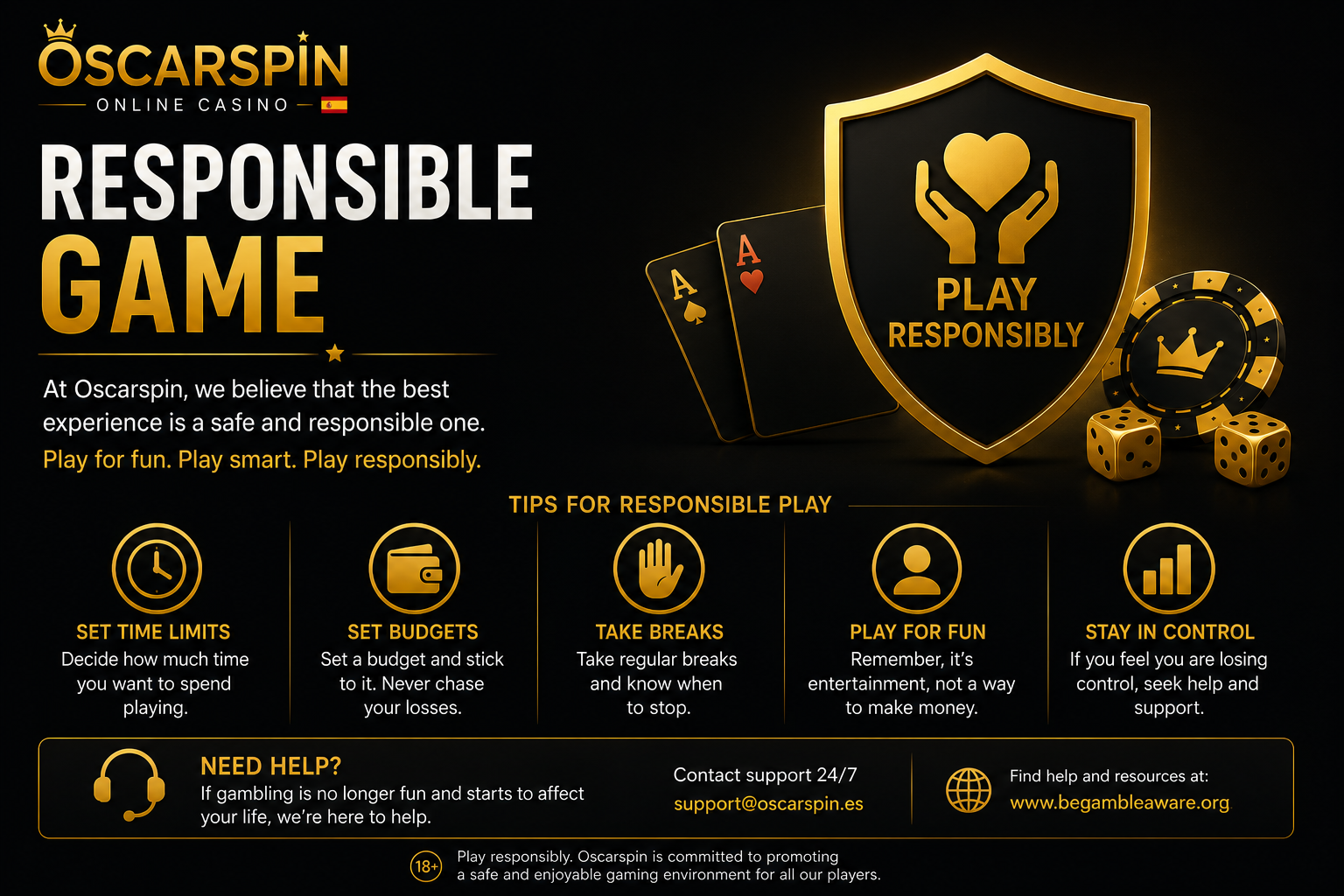
Read through these statements. No scoring system — just honest recognition of what applies to your last few weeks.
- You regularly spend more time on the platform than you planned before opening it.
- You have tried to recover money you lost by continuing to play or depositing again in the same session.
- You feel restless, distracted or irritable when you step away from the platform or try to take a break.
- You have hidden the amount of time or money you spend from people close to you.
- You have used money meant for bills, rent, groceries or savings.
- You kept going after reaching a limit you had set for yourself.
- Sleep, work, studies or personal relationships have been affected by time spent on the platform.
- You need higher stakes or longer sessions to feel the same level of engagement you felt a month ago.
| Statements That Apply | What This Suggests |
| 0–1 | Low current concern — maintain your awareness |
| 2–3 | Emerging shift — review time and spending habits |
| 4–5 | Elevated concern — take a deliberate pause |
| 6+ | Significant pattern — stop and consider speaking with someone |
Three matches is not a diagnosis. It is a signal that something has shifted — and signals are easier to act on early than late.
Stabilization Routine
When a session goes off track — you spent more than intended, played longer than planned, or irritation replaced enjoyment — this sequence interrupts the momentum before it builds.
- Stop the session. Close the app or tab. Not after the next round — immediately.
- Create physical distance. Put the phone in another room, close the laptop, step outside. The gap between you and the screen is where control starts returning.
- Disable triggers. Mute platform notifications. Remove the home screen shortcut if that helps. Every path back that you close during the pause makes the pause more effective.
- Rest for 15–30 minutes. Something unrelated — a walk, music, a conversation, a glass of water. Let the adrenaline cycle finish before making any decisions about what comes next.
- Check your real numbers. Open your banking app or transaction history. Look at what you actually spent — the full total, not the number you remember. The gap between those two numbers tells you something important.
- Reset your limits. Before returning to any platform, set new boundaries based on what you can genuinely afford, not what you want to afford.
- Talk to someone if needed. Not a forum — a person. A friend, a family member, someone whose perspective is not shaped by the same loop you are trying to break.
The urge to go back during the pause is normal. That urge is exactly the reason the pause exists.
Financial Discipline Model
Entertainment spending should come from money with no other purpose. Not rent. Not utilities. Not loan repayments. Not savings. Not money borrowed from anyone. Only what remains after every obligation is genuinely covered.
| Budget Layer | Examples | Use for Entertainment? |
| Essential expenses | Rent, utilities, food, transport, insurance | Never |
| Financial obligations | Loan repayments, subscriptions, recurring bills | Never |
| Savings and reserves | Emergency fund, future plans, irregular costs | Never |
| Discretionary spending | Dining out, hobbies, events, entertainment | Only a fixed portion from here |
Rules that keep this structure honest:
- Set the limit before the month starts. A number decided in advance, written down, treated as a ceiling. Not a rough estimate — a boundary.
- Never borrow to play. From banks, from apps, from friends. If playing requires a loan, the budget has already failed.
- No recovery deposits. When the monthly amount is gone, the session is over. Adding more to chase losses is the budget collapsing in real time.
- Track every transaction. Banking app categories, a notes file, a spreadsheet — the method does not matter. The habit does. Untracked spending vanishes from awareness, and awareness is what this entire framework depends on.
- Do not play tired, stressed or upset. Emotional states consistently produce worse decisions. If the reason for opening the platform is a mood rather than a plan — close it.
Control Tools Overview
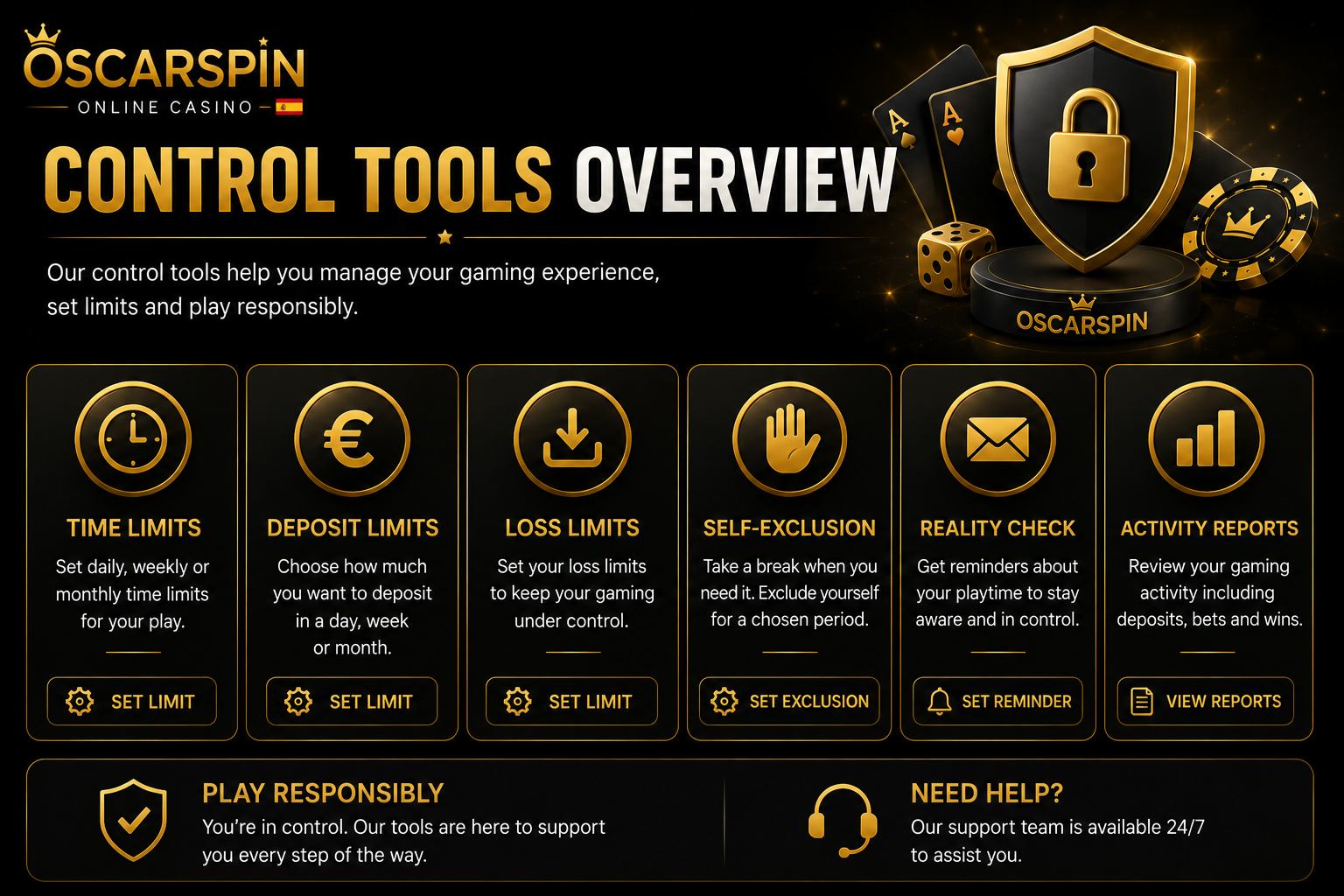
Some platforms offer built-in features for managing usage — deposit caps, session timers, cooling-off periods, self-exclusion. Whether Oscarspin provides these tools depends on the current interface and account configuration.
If built-in controls are available:
- Set them while calm and clear-headed — not during or after a difficult session.
- Deposit limits are the most effective because they prevent overspending before it happens.
- Session timers only work if you respect the alert. Dismissing it defeats the purpose.
- Self-exclusion is not a punishment — it is a structural barrier for moments when willpower alone is insufficient.
If built-in tools are not available or not enough, manual alternatives exist:
- Set a phone alarm for your planned session end time.
- Remove saved payment methods after each session — reauthorising takes effort, and effort creates friction.
- Use a separate account or digital wallet loaded only with your entertainment budget.
- Delete the app shortcut between sessions to add a deliberate step before re-entry.
- Ask someone you trust to check in with you about time and spending — external accountability works when internal discipline struggles.
Support Orientation Note
If the patterns described on this page have become persistent rather than occasional — if spending exceeds budgets regularly, if hiding activity has become routine, if stopping feels harder each time — that is territory where a checklist stops being sufficient and a conversation becomes necessary.
Gambling support services operate in Spain and across Europe. They are typically confidential, available at no cost and accessible by phone, chat or in person. We do not list specific organisations here because contact details and availability change — but searching for responsible gaming support or gambling help services in Spain will surface current options. Reaching out is a practical decision made by someone who recognises a pattern and chooses to interrupt it. Nothing more, nothing less.